

Find a list of 20 intelligent financial habits that help you become rich no matter the economic climate. Discover practical and actionable strategies designed to help you save money, make smart investments, and eventually retire early—even in a tough economy.
Growing significant wealth is not just luck or the ability to predict all the difficulties in your economy; it really comes down to the smart money habits that you apply repeatedly.
Whether you are struggling through inflation, hoarding away money through a recession, or enjoying the fruits of economic growth, habits like budgeting, saving money rather than spending it, avoiding debt at all things cost whenever possible — investing and building multiple streams of income can help keep you secure financially.
You must keep in mind what matters more than the size of your income is discipline.
You can even reach the highest peak of financial liberation in your life, find that you start saving up only a fraction compared to what you have saved now and steadily build wealth for generations to come irrespective of whichever economic cycle is in place at the time.
Table of Contents
- Hook: Why Most People Stay Broke
- The Problem: Why Financial Stress Never Ends
- 20 Smart Financial Habits That Work in Any Economy
- Tools & Resources to Accelerate Your Progress
- Conclusion + Call to Action
Why So Many People Remain Broke (Even If They Make More Money)
Have you ever found something odd and interesting?
Although two individuals may earn the same salary, one might create wealth and prosperity, while the other remains stuck in a never-ending cycle of paycheck dependency.
That is a phenomenon not due to luck or chance.
It is not determined just by total income.
👉 It is at its core something of habit.
But, in all economies, no matter how robust and roaring they are or how weak and crashing they may be—the ultimate money makers and money savers emerge as those who consistently perform remarkably simple, yet critical habits of managing their finances.
The good news is.
You do not have to be wealthy to start this path.
All you need is the right system and process in place.
The Issue: The Finish Line Continually Shifts
Most people think like this:
- “I’ll save more when I earn more.”
- “Things will naturally be better once the economy improves.”
- “I just need that one big break to turn it all around.”
However, here is the unvarnished truth:
Poor money management at lower income levels does not vanish with higher earnings; instead, financial issues often grow and become more noticeable as income rises.
People lacking strong financial habits are believed to:
- Expend larger fractions of their income as they get richer,
- Sink further into the abyss of debt,
- Miss important investment opportunities,
- Cling to a never-ending cycle of financial strain.
Which is exactly why the end goal is not just to make money…
👉 Its to steward money with wisdom and prudence — in any type of environment.
Here is a Step-by-Step Plan: 20 Smart Financial Habits That Work in Any Economy.
- Pay Yourself First
Before you pay your bills, before you start spending on anything, you can save primarily.
👉 Work towards saving at least 10% to 20% of your total income monthly.
- Tracking Every Dollar
Unless you carefully track your expenses and income, you cannot expect to make progress with your finances.
Consider apps or elaborate spreadsheets to track and monitor:
- Income
- Expenses
- Savings
- Living Below Your Means
Real wealth is not just having a larger paycheck: it is based on the concept of always, and I mean every day forever, spending less than what you make.
- Build an Emergency Fund
Set a goal of saving around 3 to 6 months’ worth of living expenses.
This cushion of liquidity protects against:
- Job loss
- Medical emergencies
- Unexpected bills
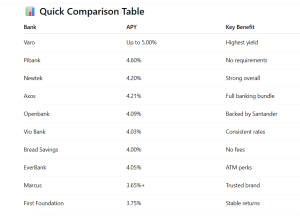
Recommended Tool: –
| Bank | APY | Key Benefit |
| Varo | Up to 5.00% | Highest yield |
| Pibank | 4.60% | No requirements |
| Newtek | 4.20% | Strong overall |
| Axos | 4.21% | Full banking bundle |
| Openbank | 4.09% | Back by Santander |
| Vio Bank | 4.03% | Consistent rates |
| Bread Savings | 4.00% | No fees |
| EverBank | 4.05% | ATM rewards |
| Marcus | 3.65%+ | Trusted brand |
| First Foundation | 3.75% | Stable returns |
- Avoid Lifestyle Inflation
Avoid upgrading every part of your lifestyle when you get a raise.
Instead:
Scale up your savings rate dramatically.
- Automate Your Finances
Set up automatic systems for:
- Savings transfers
- Bill payments
- Investments
This prevents you from making emotional-spending decisions.
- Invest Consistently (Even Small Amounts)
You do not need thousands of dollars to start investing.
Begin with:
- For diversified exposure, index funds
- Investment accounts that enable long-term growth
Recommended Book: – JL Collins (The Simple Path to Wealth)
- Rapidly Eliminate High-Interest Debt
Concentrate your efforts on:
- Credit cards that usually come with eye-watering interest rates capable of piling up and getting out of hand quickly.
- Payday loans, with their predatory terms and negative consequences on financial health.
Utilize effective methods such as:
- Such as the Snowball method (where you pay off your smallest debts first to build momentum) or
- Avalanche method (which focuses on paying off first those with highest interest rates, minimizing overall interest paid).
- Create Multiple Income Streams
Do not depend on a single paycheck for your financial wellbeing.
Look for diverse ways to have income coming in, like:
- Freelancing that allows you to apply your skills more flexibly.
- YouTube, so you can express yourself and turn your views into cash (well, if you get enough of them).
- Blogging – the ability to share your ideas and thoughts but also make money from ads and affiliate links.
- Online courses: Let you share your knowledge with others and earn money at the same time.

- Follow the 24-Hour Rule
Before you buy anything non-essential to your daily living:
Wait a full 24 hours.
This brings into play a practice that should cut the urge to spend on impulse, giving yourself time to determine if you need ownership.
- Budget with Purpose
Here is a foundational guideline for your budgeting — the 50/30/20 rule:
- This requires 50% of their income for Needs: housing, food, utilities.
- Allocate 30% to your Wants, where are those discretionary purchases related to entertainment and leisure.
- Save 20 % – Consider that and save it for those rainy days.
- Learn Financial Skills Continuously
As you learn more, your capacity to earn grows.
Recommended Book:
Rich Dad Poor Dad by Robert Kiyosaki – offers practical advice on building wealth and improving financial literacy.
- Track Your Net Worth Monthly
Recognize that wealth is not merely what you make; wealth is everything you have, less whatever you owe.
- Buy Assets, Not Liabilities
Concentrate on gaining Assets, encompassing:
- Stocks, to offer them capital appreciation; and
- Real estate assets (which can provide rental income and appreciation) ;
- Businesses — which can be very profitable.
On the other hand, be on your guard about Liabilities like:
- Expensive cars that depreciate quickly.
- Non-essential luxury purchases that can really drain your budget without adding long term value.

- Negotiate Everything
Engage in negotiations for:
- Bills, looking for reductions or different terms.
- Salary, asking for the fair-market value of your skills and contributions.
- Contracts, ensuring favorable conditions.
Small victories in these aspects can create big-time savings down the line!
- Use Cash or a Debit Card to Pay for Daily Expenses
When used similarly to an actual debit card, it drastically lessens the risk of overspending (unlike credit cards) so that you can have better control over your finances.
- Plan for Taxes
Be initiative-taking so that you can skip the surprise of owing tax on your taxes.
Save a portion of your income regularly for tax payments so that you are prepared when the time comes.
- You Are the Average of the Five People You Spend the Most Time With
Following the money, be aware that your environment has a huge effect on your habits and attitudes.
Follow:
- Podcasts focused on finance and giving advice.
- Money-makers who succeed financially and you can follow their footsteps.
- Communities who reward positive financial behaviors and learning.
- Set Clear Financial Goals
Establish concrete objectives, such as:
- Nailing that “intermediate goal,” e.g., saving $10,000.
- It is about Debt Payoff to Financial Freedom.
- Early retirees travel and just live their life free from the bonds of work.
When you set clear goals, it gives meaning and purpose to your journey towards financial prosperity.

- BE CONSISTENT (The Most Important Habit)
Understand that building wealth takes time; it does not happen overnight.
It comes from daily discipline and commitment over years.
Tools & Resources: – For Taking Your Finances to The Next Level
Budgeting Tools:
- Mint (a free budgeting application)
- YNAB (You Need a Budget)
Investing Platforms:
- Fidelity
- Vanguard
- Robinhood
Savings Tools:
- High-yield savings accounts that earn higher interest rates.
- Apps that automate the saving process.
Must-Have Financial Products (Amazon Recommendations)
This is the notebook for meticulously tracking your income, expenses, and financial goals.
📌 2. Financial Freedom Book Bundle
A series is meant to give you solid strategies for wealth-accumulation and financial freedom.
But it is a great tool for tracking spending and sticking to your budget.
Last: – Your Financial Future Begins with Developing the Habits of Saving.
Here is a cold fact that most people refuse to acknowledge:
It is not the state of the economy at large that determines how your financial future will pan out; rather, it is the habits you practice daily.
You possess the ability to:
- Even during a recession, you can build extensive wealth.
- Cut costs significantly despite all barriers of inflation.
- Invest strategically during times of uncertainty and turbulence.
It is also all accomplished by developing simple but iron-clad financial habits that you follow faithfully and consistently.
Which transformative habit will you choose to begin today?
We encourage you to comment and share with us your greatest insight from this conversation!
This is the latest information that you should save if you like it also:
- Share this post with others.
- Bookmark it for future reference.
- Follow us for more tips on how to build wealth.
Highly Recommended: –
25 Things That Poor People Buy, Rich People Avoid (and What to Do Instead)!
Where you would learn the most defining reason behind the huge disparity between struggles financially and creating ever growing wealth is simply how each party spends their money.
Lower-income and middle-class individuals often buy goods and services that wane in value, incurring debt or producing a mere fleeting high.
In contrast, rich people know that they should purchase assets instead of liabilities, invest in planets that provide high returns and seek streams of passive income.
References
- JL Collins – The Simple Path to Wealth
- Robert Kiyosaki – Rich Dad Poor Dad
- Investopedia – Personal Finance Principles
U.S. Federal Reserve – Savings Data Reports



Comments
I started writing down one thing at the end of every day — what I actually managed to do. Not a to-do list, not plans. Just one small win. It’s surprising how quickly it shifts your perspective.